

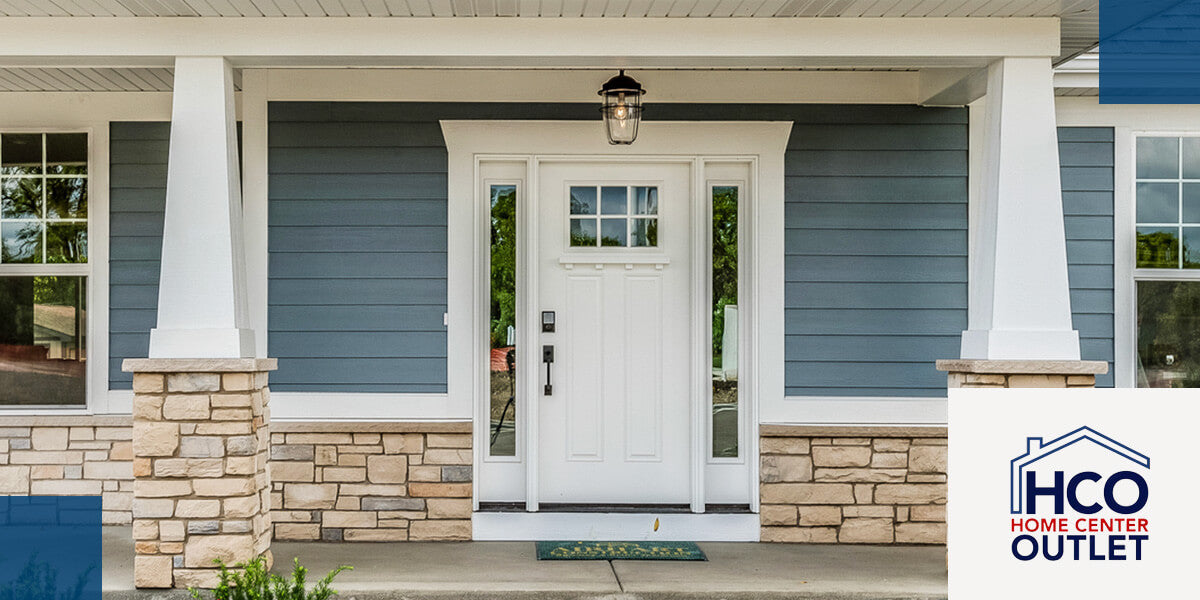
Your front door should be beautiful and well-maintained as the entryway to your home. An exterior door fulfills several essential functions, and its role goes beyond contributing to the aesthetic appeal of your home. Your front door should also be strong and durable, open and close seamlessly, and lock and secure you from the outside world to give you peace of mind.
Whether you're a homeowner, property owner, first-time buyer, or DIY enthusiast, we've put together an exterior door buying guide to help you decide when to replace, upgrade, or install a new door. Learn how to choose an exterior door with this guide!
Factors to Consider When Buying Exterior Doors
Several factors should be considered when evaluating different types of exterior doors, including installation, material types, measuring and sizing tips, and style and design considerations. Let's unpack these in more detail.
Types of Exterior Doors
When you're picking out an exterior door, you'll usually choose between two main types — prehung doors and slab doors. Both have their benefits, so the type you choose depends on your needs.
- Prehung doors: These doors are already attached to a frame, and most include hardware, such as the hinges, pre-cut holes for knobs, weather stripping, and thresholds. Some include the doorknob, handle, or lock. Because everything is assembled for you, prehung doors are easy to install, especially if you're replacing a door and its frame. You just need to measure carefully to ensure a good fit. Prehung doors are a good choice if you're looking for something that's weather-tight or if your current door frame needs replacing.
- Slab doors: A slab door includes only the door itself, without any framing or hardware attached. You'll have to buy and install hardware items like knobs and locks separately. These doors are usually lighter and more budget-friendly, giving you more flexibility in design and customization. A slab door might be the right choice if your home has unique door sizes or styles. However, if the existing door is over 25 years old, switching to a prehung door might make more sense to ensure a tight, secure fit.
Measuring and Sizing Tips
Selecting the right size is one of the most critical steps in choosing an exterior door. Luckily, it's not too complicated. Measure the width and height of your existing door, rounding each measurement up to the nearest inch. That should provide a reasonable estimate of exterior door sizes that will likely fit your existing frame.
However, understanding a few basic door-measuring terminologies is helpful when determining the correct sizes:
- Rough opening: This is the space in the wall that your door and frame will fit into. It's usually about 2 inches wider and taller than the actual door, giving you enough room to install it properly.
- Jamb depth: The jamb depth tells you how deep your door frame needs to be, from the inside edge of the frame to the wall where it ends. It's important to note that this measurement does not indicate how wide the door is — instead, it tells you how thick the frame needs to be to be a good fit with the wall.
- Net frame dimension: This measurement is the total width of the entire doorframe, not just the door itself. An accurate net frame dimension will help to ensure the frame fits the door opening.
- Masonry opening: If your door is surrounded by brick or stone, this is the measurement of the space between the bricks surrounding your door. You'll want to ensure your door and frame fit nicely within the masonry opening.
Understanding exterior door sizes will save you a lot of trouble during installation and help you pick a door that looks great and seals well.
Material, Functionality, Style, and Design Considerations
When choosing between different types of front doors, you need to consider how they look and perform. One important factor is the exterior door materials you choose. Common options are iron, aluminum, wood, or fiberglass. Each material has unique characteristics that impact durability, appearance, and overall energy efficiency. The best choice is the one that meets your needs, preferences, and vision for your home's entryway. Let's explore the benefits that each has to offer:
- Iron doors: If you choose an iron door for your entryway, you'll have unmatched security and strength. They're incredibly durable and resist external elements, making them a long-lasting option. Iron doors are available in various styles and can be customized with decorative glass panels and elegant finishes. They're heavy, bold and make a statement. Modern iron doors can also be very energy-efficient, especially when appropriately insulated.
- Aluminum doors: Constructed from heavy-duty, extruded aluminum with a thermally broken frame, these doors deliver exceptional strength, modern aesthetics, and long-term durability. They’re built to withstand the elements without warping, rusting, or deteriorating over time. With sleek profiles, large glass panels, and excellent thermal performance, aluminum doors are ideal for homes that value both design and efficiency.
- Wood doors: If you want a heavy, sturdy front door with a natural, traditional look and style, solid wood doors are a top choice. They come in various species and finishes that fit your desired style and budget. Wooden doors also gain character as they age and can be sanded or refinished if scratched. Wood naturally insulates well. When paired with proper weatherproofing, it's a good option for maintaining energy efficiency.
- Fiberglass doors: If practicality and a middle-of-the-road price range are important, fiberglass doors are a good option. They're good quality, versatile, durable, and do not require extensive maintenance. They are often available in multiple finishes and textures to resemble real wood doors. Many fiberglass doors have an insulated core for excellent thermal performance, making them an energy-efficient choice.
You'll also want to consider how the door opens and closes. If the door opens to the outside, it's an outswing door. If it opens to the inside, it's an inswing door. Both types can be set up with either left- or right-hand configurations, depending on how you want your entryway to flow.

Why Choose Home Center Outlet for the Best Exterior Doors for Homes
Home Center Outlet can help you find an exterior door that fits your home's style, security, and energy needs. We work closely with expert manufacturers to bring lasting value without compromising quality. From the strength and security of our iron doors to the sleek design of our aluminum series, each product is made to perform and built to last.
We aim to make the door purchasing process as smooth and straightforward as possible. Our high-quality products can be viewed online or in person at any showroom. Our doors can also be shipped directly to your home without extra stops, saving you time and hassle!
Opening the door to endless possibilities™, we are your trusted resource, ready to guide you every step of the way so you can make an informed purchasing decision with confidence!
Shop at Home Center Outlet to Find the Best Door for Your Home
Are you ready to transform your home's first impression? Home Center Outlet offers a premium collection of the best exterior doors crafted in aluminum, wood, iron, or fiberglass to meet all your style, security, and energy efficiency needs!
Browse our exterior doors online anytime, or visit one of our showrooms for an in-person experience. We're open seven days a week from 10 a.m. to 5 p.m. and are your trusted partner from selection to installation. Let's help you discover the door that welcomes you home!


